


Walk through a food plant an hour before shift change and the bottleneck usually announces itself before you see it: a row of people at long benches, folding boxes as fast as their hands allow, with stacks of flat blanks creeping upward whenever the front-of-line speeds up. Nothing about the product is slow — mixers, ovens, freezers and conveyors all run to schedule. The constraint lives at the point where a printed blank becomes a box.
Plants tolerate this bottleneck for years because it hides inside ordinary wage bills. Three or four people folding cartons look like “packaging staff,” not like a capacity ceiling. The ceiling only becomes visible when sales grow, when a retailer tightens its delivery schedule, or when the recruiting team can no longer find anyone willing to spend eight hours a day creasing cardboard by hand. A carton erecting machine exists precisely for that moment: it takes blanks straight from the flat and hands over finished, standing boxes, shift after shift, without depending on anyone’s wrists.
This guide is written for plant managers and purchasing teams in food manufacturing who are weighing that investment. It covers what an erecting machine actually does, how it differs from the cartoner downstream of it, which carton constructions it can form, how to size a machine against your volumes, and what the payback typically looks like.
What a Carton Erecting Machine Does — and What It Deliberately Doesn’t
A carton erecting machine — sometimes called a box forming machine or carton erector — performs a single transformation: flat blank in, three-dimensional box out. Vacuum cups lift each blank from the magazine, the machine squares the sidewalls, closes and locks or glues the base, and delivers a standing carton onto the outfeed conveyor. One job, repeated thousands of times per shift with the same geometry every cycle.
What it deliberately does not do is fill the box or close its top. Loading the product and sealing the lid belong to the next stage — a hand-loading bench, or an automatic cartoning machine. This division of labor matters when you plan a line: the erector is mechanically simpler, cheaper, and faster to install than a full cartoning system, which is why so many food plants treat it as their first step into packaging automation and add a cartoner later once volumes justify it.
Four Carton Constructions, Four Different Forming Actions
Food brands settle on very different carton architectures depending on product weight, retail channel and shelf presentation. Each architecture demands its own forming sequence, which is why box style is the first question we ask a new customer.
1. Auto-Bottom (Crash-Lock) Cartons
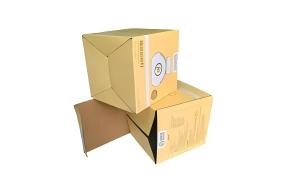
Known across the industry as auto-bottom, crash-lock or 1-2-3 bottom cartons, these blanks carry a pre-scored base that snaps into its locked position the moment the box is squared. Glue is not involved in the base; interlocking die-cut flaps carry the load. On the machine side, forming relies on precise blank feeding and a positive pressing action that drives the base panels home — a bottom that is not fully snapped home is the defect every frozen-food plant fears, because the first sign is a tray of dumplings on the floor. Formed correctly, the base holds firm under dense, heavy fills such as frozen trays, multi-packs of confectionery or catering-size bakery items.
2. Tuck-Flap Cartons
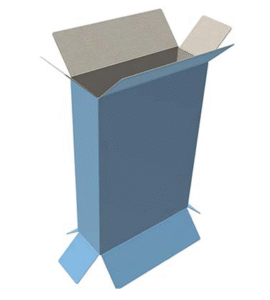
Tuck-flap construction — straight-tuck on one end, reverse-tuck on the other, depending on how the closing panels fold relative to each other — remains the workhorse of retail food packaging: biscuit cartons, chocolate singles, bar snacks, tea boxes. The base panels fold in and tuck into the box walls rather than locking against each other, so the forming sequence is a matter of creasing, folding and seating in strict order. These blanks feed fast and change over quickly, which suits the short-run, multi-SKU reality of seasonal food retail.

3. Glue-Sealed Cartons
Where tamper evidence or export-grade rigidity is specified, the base (and sometimes the top) is bonded with hot-melt adhesive. The erecting machine then carries a glue system that lays a controlled bead before the pressing stage, and the flaps are held until the bond takes. Cycle rates run a little lower than purely mechanical styles because of the dwell involved, and the glue unit adds a routine maintenance item — nozzle cleaning, tank temperature checks — that buyers should budget for from day one. Premium confectionery, infant nutrition and anything shipping through rough distribution channels are the usual candidates.
4. Lid-and-Base Rigid Cartons
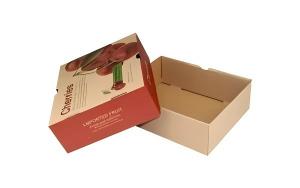
Gift-oriented food packaging — premium chocolate assortments, festive biscuit tins’ outer cartons, high-end tea sets — uses a separate lid and base formed from two different blanks. Forming equipment for this style works the two components in sequence and marries them at the outfeed, and runs at modest rates compared with folding-carton styles. The economics are different too: these runs are shorter and more seasonal, so buyers typically prioritize forming accuracy and presentation quality over raw speed, because a visibly misaligned lid undermines the very premium the package is meant to convey.
Sizing the Machine to Your Operation
Three questions drive the selection, and they should be answered in this order.
1. Which constructions must the machine form? The forming hardware is specific to the box geometry. A crash-lock setup will not form tuck-flap blanks without module changes, and glued styles require the adhesive system to be present from the start.
2. What throughput do you actually need? Convert your daily target into a machine rate before comparing quotations. The “net” matters. Budgeting with a realistic net figure is what prevents the new machine from becoming next year’s bottleneck.
3. How does it connect downstream? Two integration patterns dominate: semi-automatic (manual loading) and fully automatic (coupled to a cartoner).
Where Food Plants Deploy Erecting Machines
- Frozen and chilled ready meals: Tray-loaded dumplings, fillets and meal kits.
- Bakery and biscuits: Private-label biscuit and pastry cartons in tuck-flap styles.
- Confectionery and gifting: Multi-packs in crash-lock bases for strength.
- Tea, coffee and specialty retail: Glue-sealed or tuck-flap cartons.
What the Investment Returns
1. Direct labor: Automating the step releases hours permanently and removes the hardest-to-staff role on the packaging floor.
2. Variance: Machine-formed cartons hold geometry constant, raising the effective throughput of everything after the erector.
3. Auditability: Consistent mechanical forming makes the process instrumented and reliable for food-safety audits.
Frequently Asked Questions
How long does a format changeover take? Dimensional changes are manual adjustments completed in ten to fifteen minutes. Swapping between different constructions involves planned module changes.
Do auto-bottom cartons need glue on the machine? No, they lock mechanically.
What should we prepare before requesting a quotation? Carton blank samples, board grade, target output, shift pattern, and loading method.
Start With a Trial, Not a Purchase Order
Send us your carton blanks and product details, and our engineering team will run them on the matching configuration. The trial is free, carries no purchase obligation, and visitors are welcome to watch it in person at our facility in Dongguan.
To review your carton formats and output targets, contact the UBL Packing Solutions team at sales@huanlianauto.com or via +86 159 1575 7872, or browse our box erecting and cartoning equipment at ublpacking.com.
Post time: Sep-22-2026