


Anyone who has worked on a food plant floor knows the scene: the cookie oven and the flow wrappers up front run flat out, product rolls off the conveyor nonstop — and then everything piles up at the cartoning station in the back, where five or six workers are frantically folding boxes, loading product, and pressing flaps shut, unable to keep up. When peak-season orders land, or a last-minute e-commerce promotion spikes volume, the packing station turns into the bottleneck of the entire line: front-end capacity gets throttled, and workers are pulling overtime just to fall further behind.
There is a second, less visible pain: labor. Fewer and fewer people are willing to stand at a station all day folding and filling cartons. Wages climb year after year, turnover keeps rising, and a job that takes two to three weeks to learn properly is filled by someone who may not stay.
If these problems sound familiar, this article is for you. We will explain what a snack cartoning machine actually does, how to match a machine to your product mix, what you must verify before buying, and roughly how long it takes for a line automation project to pay for itself.
1. Market Context First: A Trillion-Yuan Snack Market Is Forcing the Packaging Stage to Upgrade
Snacks are one of the largest and most fragmented segments in China’s food industry. Baked goods, biscuits and extruded snacks, nuts and roasted seeds, chocolate and candy, energy bars, marinated meat snacks — nearly every subcategory has expanded quickly over the past decade.
According to data from iiMedia Research, China’s snack food industry reached approximately RMB 1.155 trillion in 2024 and grew to about RMB 1.180 trillion in 2025; it is projected to hit RMB 1.238 trillion by 2027. Several very concrete shifts sit behind these numbers:
Fragmented channels. Beyond supermarkets and traditional distribution, bulk-discount snack retail chains surged to roughly 42,000 stores in 2024 (per CITIC Securities research). Add livestream e-commerce and community group buying, and the same product often has to be packed into several different carton configurations.
More SKUs. Brands are launching new products at a much higher cadence to fight for shelf space and traffic, making small-batch, multi-run production the new normal.
Fiercer shelf competition. In offline retail, a carton’s square corners, flat flaps, and wrinkle-free window film directly decide whether a shopper picks it up at all.
At the production level, these trends mean one packing room has to handle more carton sizes, more frequent changeovers, and stricter appearance consistency. This is exactly why snack plants keep increasing their investment in packaging machinery: according to the China Food and Packaging Machinery Industry Association (CFPMA), the industry’s total output value reached RMB 325 billion in 2024, up 8.9% year on year — noticeably faster than the machinery sector average. Automating the secondary packaging stage is the most common first step in this upgrade wave.
2. What a Snack Cartoning Machine Actually Does
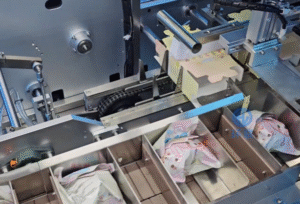
A standard fully automatic snack cartoning machine performs three jobs on its own:
Carton erection
Flat blanks stacked in the magazine are picked one by one by vacuum suction cups, opened, squared up by mechanical folding wings, and placed onto a chain conveyor with clamping stations.
Product loading
Product arriving from upstream — a stack of wrapped biscuits, individually wrapped energy bars, or sealed snack pouches — is collated and oriented, then pushed precisely into the open carton cavity by a servo-driven pusher.
Carton closing and discharge
Depending on the carton style, the machine automatically tucks the end flaps, applies hot-melt adhesive, or engages a lock-bottom closure, then transfers the finished carton to the outfeed conveyor, linking to downstream labeling, coding, checkweighing, or case packing.
Taken together, these three steps replace what is typically a four-to-five-person manual cartoning station. Just as important, the machine’s cycle is governed by cam phasing and servo motion profiles — the first carton of the morning and the last carton before shift end are closed with exactly the same force and tuck depth. A machine never gets tired, never needs a break, and never cuts corners just because the supervisor stepped away.
3. Why Snack Secondary Packaging Differs From Other Food Categories
People who come to snacks from ambient or frozen food packaging often run into surprises. That is because snack secondary packaging has three distinct characteristics, and every one of them should be checked against the machine you choose.
Characteristic 1: Many SKUs, Frequent Changeovers
It is common for one snack packing line to run a dozen or more carton sizes in a single month: 8-bag biscuit multipacks today, 12-piece chocolate boxes tomorrow, and a Chinese New Year gift combination of nuts the day after. Each size has different carton dimensions, a different count per box, and often a different infeed format.
The machine therefore needs tool-less changeover: infeed guide width, pusher stroke, and carton dimensions should be stored as touchscreen recipes, so an operator can recall a full SKU setup with one tap and fine-tune guides with handwheels while watching target values on the HMI. For size changes within the same carton style, a skilled operator should finish in under ten minutes.
Characteristic 2: Fragile Products That Can’t Take Rough Handling
Biscuits shatter, chocolate cracks under mechanical impact, and a thin-film energy bar punctures if it is pushed too hard. So the pusher mechanism must not be one-dimensional: it has to support independent adjustment of speed and acceleration profiles, with delicate chocolate running on gentler settings than a wrapped energy bar. Both profiles live in the recipe and are recalled automatically when the SKU changes — the operator never touches a mechanical part.
Characteristic 3: The Carton Is “Half the Salesperson”
Snack cartons sit at eye level in prime shelf positions, and window cartons are especially common. Consumers see the box before they see what is inside. A carton with crisp corners, flat flaps, and smooth window film signals quality; a crooked one drags down even a great product. The repeatable precision of machine closing is something a manual station can never deliver.
4. Matching the Machine to Your Product Category
Pouch-packed nuts, dried fruit, and seeds
These arrive at the cartoning station already sealed — typically foil pouches or resealable zipper bags. The challenge is that fill level and pouch thickness vary, so the infeed channel needs a wide adjustment range that does not require swapping parts. If you run multiple pouch sizes on one line, look for recipe memory: switching between two pouch widths should take under ten minutes, otherwise you are not really saving labor.
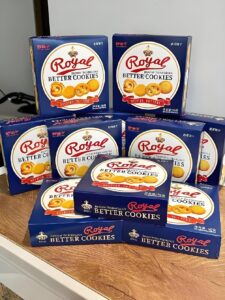
Wrapped biscuits, wafers, and shortbread
Infeed is usually a stream of joined products from flow wrappers that must be cut, grouped, and collated before pushing. The stability of this collating section decides the machine’s real-world efficiency, so make sure the supplier tests with your actual product before you commit.
Chocolate and candy bars
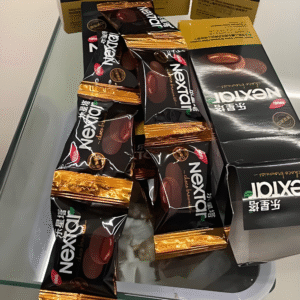
This is the category most sensitive to pusher speed profiles — chocolate gets even more brittle in cold workshops, so parameters must be tuned and locked in for each format. For windowed gift boxes, also check the suction pressure during blank pickup so the carton face is not dented.
Energy and protein bars
Thin film wrappers tear easily and the bars themselves are soft, so prefer a machine with gentle gripping options and selectable low-speed feeding.
5. Look Beyond the Packing Room: The Carton Has to Survive the Whole Distribution Chain
Cartons leaving the machine still have a long journey ahead: case packing, palletizing, warehousing, loading, distribution, and finally shelf placement. With all the stacking, vibration, and manual handling along the way, a carton closed with too little tuck depth or uneven glue is at real risk of popping open in transit — product spills inside the outer case, and customer complaints and returns follow.
Machine closing keeps the closing force constant on every single carton. For export shipments or long-distance distribution, a hot-melt adhesive closure is the safer choice: the glue bond holds through temperature and humidity cycling, and with stable temperature and bead-volume control (the accuracy of the applicator and its temperature regulation is the key spec), the carton stays sealed from the line all the way to the consumer’s hands. Plants in northern China with cold winter workshops should specifically confirm that the glue system performs reliably at low ambient temperatures.
6. The Hidden Cost of Changeover: A Math Lesson for Multi-SKU Plants
A snack plant runs 15 active carton sizes and changes over three times a week — more than 150 changeover events a year. On a manual line averaging 45 minutes per changeover, that is over 110 hours of lost capacity annually. With a recipe-based automatic cartoner that cuts same-style size changes to under 10 minutes, that annual loss drops by roughly 80%.
One more point worth flagging: if your plant uses both tuck-end and glue-seal cartons, the two closing modules differ, so switching between them takes considerably longer. The pragmatic approach is to configure the machine for the carton style that covers the majority of your volume, and route the minority style to another line or plan a module swap in advance. Work this out in pre-purchase technical discussions — not after the machine is installed.
7. A Cartoner Is Not an Island: Upstream and Downstream Integration
Measure the distance and path between the upstream exit and the downstream entry, and verify that the cartoner’s infeed and outfeed conveyor heights match your existing line. If floor space is tight, ask the supplier for a layout drawing.
The difference between upstream output rate and cartoner cycle speed must be absorbed by enough infeed buffering. If upstream delivers 60 units per minute and the cartoner is configured at 40 cartons per minute, the accumulating buffer in between is sufficient; but if upstream runs far faster than the machine and the buffer is too short, the line will keep stopping. Have the supplier run a configuration calculation based on your actual line speed before installation — this step cannot be skipped.
8. Machine Closing vs. Manual Closing: How Big Is the Consistency Gap?
The quality of a manual cartoning station depends on the skill, fatigue, and time pressure of whoever happens to be on shift. A veteran who has been folding tuck-end boxes for eighteen months produces neat, crisp cartons; a temp worker in their first week produces visibly crooked ones — and a retail buyer inspecting the shipment can tell the difference at a glance.
An automatic cartoner eliminates this variable completely: every carton is closed with the same force and geometry, regardless of how long the machine has run, what time of day it is, or who is watching the infeed. This consistency is both shelf image and distribution safety: properly closed cartons survive transport vibration, while poorly closed ones are a standing complaint risk.
9. The Labor Cost Equation Keeps Getting Worse
Recruiting packing workers is no longer a temporary difficulty in food manufacturing — it is a structural shift. Looking at public job postings across the country, food-plant general workers typically earn RMB 4,500–7,000 per month, and more on two-shift arrangements. Add social insurance and related costs, and a five-person manual cartoning station running two shifts easily costs over RMB 800,000 a year in labor.
A cartoner compresses the station to one operator per shift, and the job itself changes from physical folding and loading to magazine refilling, recipe recall, and clearing the occasional carton jam — easier to recruit for and much cheaper to train. A new machine operator is up to speed on their own within two to three days, versus two to three weeks for a skilled manual packer. For snack plants with volatile seasonal order volumes, “no emergency hiring sprees when orders spike” is worth almost as much as the wage savings.
Illustrative Payback Calculation
Illustrative payback calculation (actual figures vary by region and machine model): a ten-person station across two shifts is reduced to two operators; at an all-in monthly labor cost of about RMB 6,500 per person, annual savings come to roughly RMB 620,000. Against typical domestic pricing for a fully automatic cartoner, the payback period is usually around 12 months. And if the manual line’s 1–3% carton defect rate (crooked boxes, crushed corners, poor tucks) drops below 0.5%, payback only gets faster.
10. Sanitary Design: A Baseline Requirement, Not a Bonus
A proper snack cartoner should be built largely from food-grade stainless steel with smooth, crevice-free surfaces. Even though the machine handles finished primary packaging and never touches the edible product directly, it sits inside a clean production area, so the whole unit must meet the workshop’s hygiene standards for external surfaces and the area around the infeed. Before buying, confirm three things: how easy the machine is to clean before a shift, how paper scrap and dust are collected, and whether the lubricants are food grade.
11. A Real-World Conversion Case
A confectionery plant produced individually wrapped chocolates in 12-piece and 24-piece retail cartons. Before the upgrade, the secondary packaging station ran with five workers — two folding boxes, one loading chocolates, two closing flaps — at roughly 20 cartons per minute, and the station dragged down total line output in peak season. After installing a fully automatic cartoner, the station runs with one operator at about 45 cartons per minute, the other four workers were reassigned to other processes, and the investment was recovered in approximately 13 months.
12. Three Things to Verify Before You Buy
Send your carton samples (including flat-blank dimensions) to the supplier for a trial run. Focus on blank-erection success rate, closing quality, and jam rate — and ask for a video of the test.
Be clear about whether your product arrives pre-grouped, individually oriented, or in bulk. Each format calls for a different collating solution, and pricing differs accordingly.
Ask the supplier to propose a configuration and layout drawing based on your existing line and upstream equipment speeds.
If conditions allow, visit the supplier’s facility and watch a live trial — it beats any brochure. Standard-configuration machines generally ship quickly, while custom builds (non-standard carton sizes, special line interfaces) need to factor in design and approval lead time. The acceptance scope should cover installation and commissioning, operator training, a full-machine warranty (one year is the industry norm), and the supplier’s commitment to send an engineer on site when a fault cannot be resolved remotely.
Frequently Asked Questions
Can one cartoner handle both cookies and chocolate?
Yes. A machine with adjustable infeed guides and recipe-stored pusher parameters can serve multiple product categories, with same-style size changeovers typically completed in under ten minutes.
Is there a minimum order quantity for carton blanks?
No. The machine feeds from a magazine loaded with whatever quantity you put in it; order blanks from your box supplier according to your own production schedule.
How long does installation take?
For standard models, on-site installation and commissioning typically take one to two days, and about half a day of operator training gets your people working independently.
What happens if the machine breaks down?
The industry standard is a one-year full-machine warranty covering parts and service; faults that cannot be fixed remotely are handled by an engineer visit. Make the response-time commitment part of your contract.
Closing Thoughts
Competition in the snack industry has moved from “do we have the product” to “is it good, is it fast, is it consistent” — and the secondary packaging station is exactly where delivery capability and shelf performance are decided. A cartoner is not a magic box, but for production managers wrestling with recruiting, changeovers, and peak-season capacity, it is very likely the equipment purchase with the most certain return.
If you are planning a snack cartoning line, send us your product samples and carton specifications for a free trial run. We will run them on a real machine and provide video documentation, so you can see actual performance before you commit.
Post time: Aug-31-2026