


A hoodie comes off the folder with one sleeve caught under the hem. The operator straightens it by hand, the way she has done every few cycles since the line was installed. The machine is not broken. It is simply doing a job it was never sized for, and someone on the floor pays for that gap in every shift.
Most buyers never run into this. A full-auto line built for tees, a thick-and-thin unit for mixed weights, a semi-auto station for modest volumes — between them, these configurations cover the majority of garment folding work. The problems start when a real production requirement falls outside what those catalog machines assume. Pushing a non‑standard job through a standard machine does not produce a slightly worse result; it produces a line that needs constant manual correction, which quietly erases the labor saving the machine was bought for.
None of this puts a custom clothes folding machine in some luxury tier above the catalog range. It is simply the correct tool for a specific, identifiable set of situations — and recognizing those situations early saves months of workarounds.
What a Standard Configuration Actually Assumes
Every catalog folding machine is engineered around four assumptions. Your garments sit inside a defined envelope of length, width, and folded output size. Your fold follows a conventional bilateral‑then‑longitudinal sequence. Your packaging runs on standard polybag dimensions with a heat seal and a label in the usual position. And the machine works as a standalone island, with an operator feeding it and collecting at the output end.
When all four assumptions hold, a standard machine with adjusted parameters will do the job well, and there is no reason to spend on custom engineering. The decision gets interesting when one or more of those assumptions breaks — because each break point maps to a different kind of customization, with different cost and lead‑time implications. Buyers weighing automation levels more broadly can also look at our comparative analysis of automatic and semi‑automatic equipment, where the same trade‑off between throughput and flexibility shows up across machine categories.
Five Signals That a Catalog Machine Won’t Hold Up on Your Floor
★ 1. Your garments sit outside the compatible size envelope
Every folder has hard limits: minimum and maximum garment length, garment width, and finished pack dimension. Oversized outerwear, infant garments, hospital gowns with tie closures — anything near or past the edge of that envelope either jams, folds unevenly, or needs an operator to finish the fold by hand. A custom build re‑works the folding geometry, belt width, and arm stroke around your actual garment measurements, not the other way around.
The apparel industry’s size spread keeps widening. Organizations such as Textile Exchange document how brands keep expanding category mixes — more outerwear, more children’s lines, more specialty formats — which means the “average garment” a standard folder is tuned for describes fewer real products every year.
★ 2. A buyer’s packing spec dictates the fold, not you
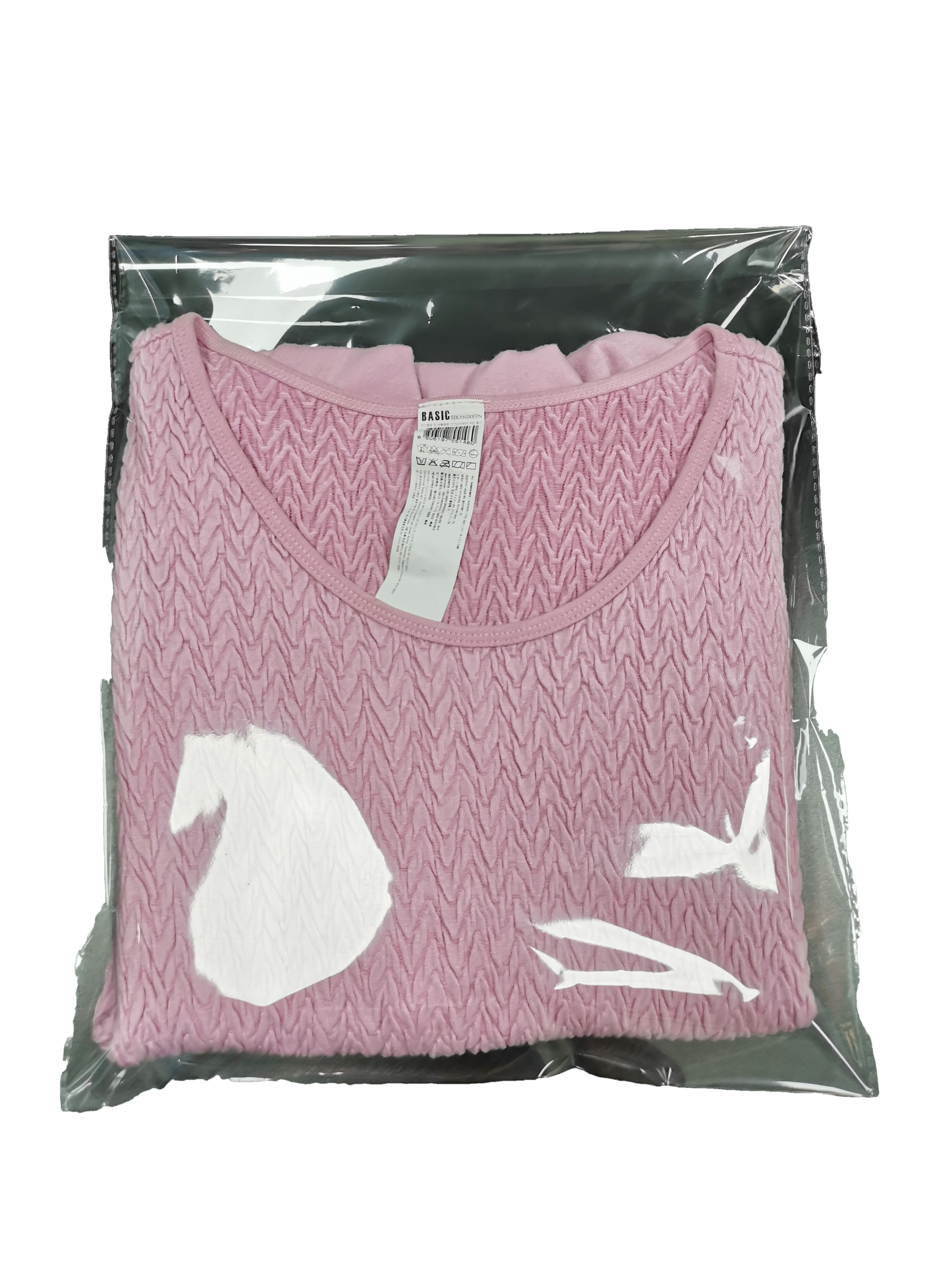
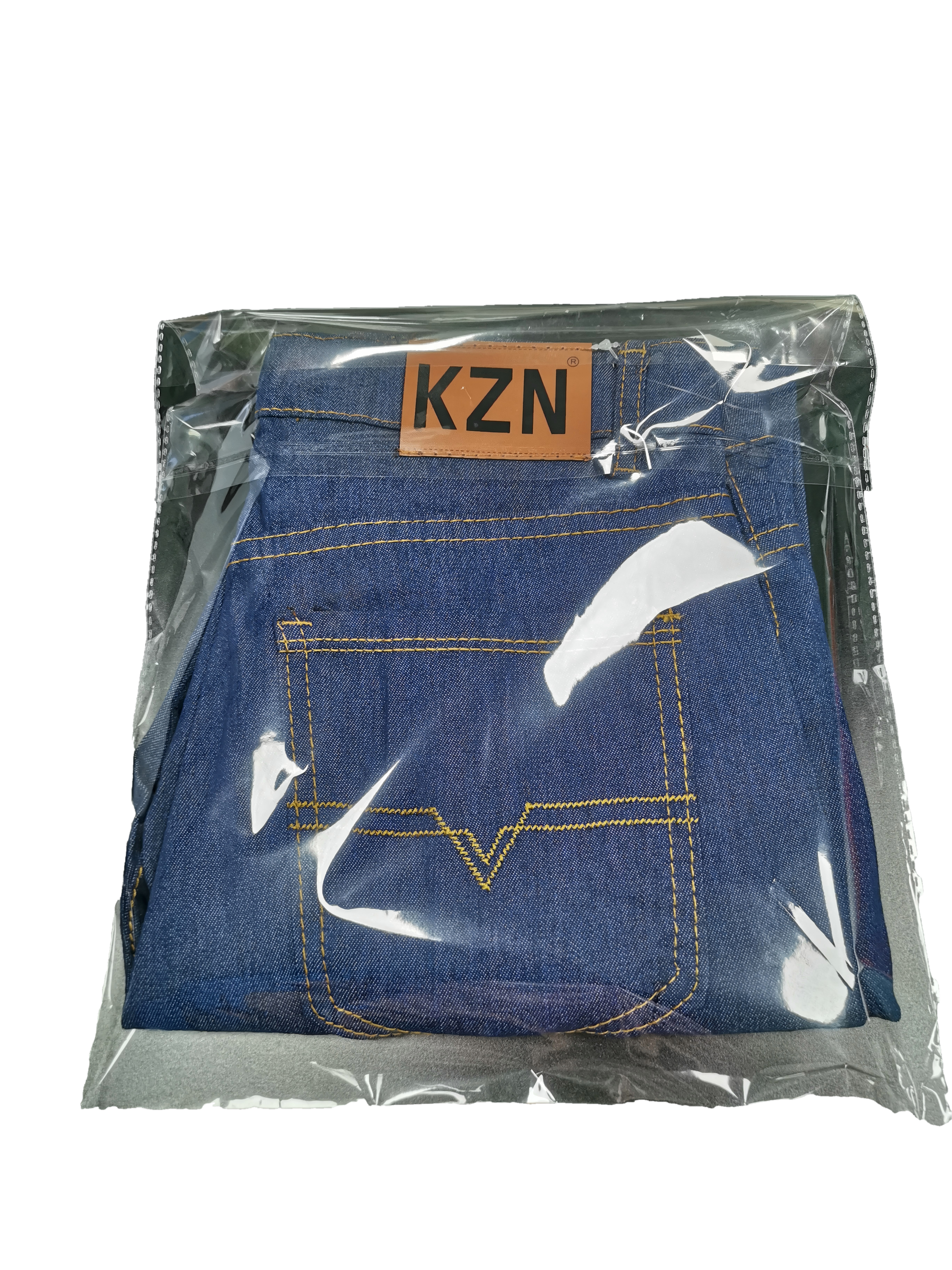
Retailers and brand owners increasingly specify the fold itself: how many folds, in which direction, to what finished dimension, sometimes down to label orientation on the pack. When that specification deviates from the standard sequence, the machine has to be configured for it before the first production run, not patched afterward.
On the control side this is manageable — UBL’s HMI stores up to 99 parameter sets, so fold programs for different accounts can be kept on file and called up without touching the mechanics. But software presets only work within the hardware’s physical range. If the required finished dimension sits outside that range, the machine frame and fold arms have to be built to the extremes of your spec.
★ 3. The folder has to talk to machines upstream and downstream
A standalone folder with manual infeed suits many factories. It stops suiting them the day the floor reorganizes into a continuous flow: sewing or finishing feeding the folder, the folder feeding bagging, labeling, and a conveyor toward carton packing. At that point the folding machine becomes one node in a chain, and it has to match conveyor heights, handshake electrically with neighboring equipment, and pace itself to line speed.
Standard machines are built as islands by default. Line integration is custom work — interface components, matched conveyor heights, shared control signals — and it is far cheaper to specify it at purchase than to retrofit it after the machine is bolted down.
★ 4. Your bag, seal, or label doesn’t match the default format
Packaging format is its own category of customization. Zipper‑closure bags instead of heat seals. Bag sizes far above or below the standard range. Double‑layer bagging, where the product bag goes inside a courier pouch. Label positions dictated by a retailer’s routing guide rather than by machine convention. Each of these changes the bagging and labeling stations, and none of them can be solved by adjusting parameters alone.
★ 5. Volume has outgrown semi‑auto, but the budget hasn’t reached full‑auto
This is the signal buyers mention least and act on most. A standard semi‑auto unit no longer keeps pace with orders, yet the jump to a full‑auto line is hard to justify on current volume. For exactly this gap, UBL builds upgraded configurations on a semi‑automatic clothes folding machine base with automated bagging and sealing added downstream — fold, bag, and seal in one pass at roughly 400 pieces per hour, at a cost point between the two standard tiers. It is the right answer for the years when volume is climbing toward full‑auto justification but has not arrived.
Case: One Operator, 400 Packed Garments an Hour
A recent customer came to UBL with two hard constraints at once: a budget that ruled out a full‑auto line, and a floor layout that had no room for one either. Folding speed was not their bottleneck — bagging was. Garments piled up between the folding table and the two people who bagged and sealed by hand.
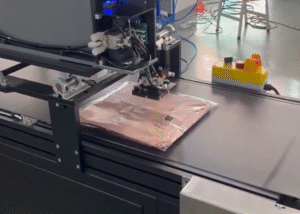
The configuration UBL built for them paired a semi‑auto fold base with an automated bagging and heat‑seal station downstream. One operator at the infeed; fold, bag, and seal happen in a continuous sequence at about 400 pieces per hour. The footprint fit the available space, and the investment landed inside the customer’s budget.
The arithmetic afterward was simple. What had taken two manual steps — one person folding, another bagging and sealing — became a single station with one operator, running faster than the two‑person process it replaced. The second pair of hands moved to work that actually needed them.
How a Custom Project Moves From Brief to Factory Floor
Custom work follows a fixed sequence at UBL, and knowing it in advance makes the buying process faster.
- Requirement assessment. Everything starts from your production reality: garment types and measurements, fold specification, output format, daily volume, floor layout, and any downstream equipment the machine must connect to. The first deliverable is an honest verdict — standard model, parameter adjustment, or genuine custom build. Many inquiries end at the first or second answer, and we say so when they do.
- A/B layout proposals. For real custom builds, UBL prepares two layout options that solve the same requirement from different directions — different footprint, throughput, investment level, or functional scope. You pick the option that fits your priorities, or the two options become the basis for a hybrid.
- Sample trial. Before specifications are locked, your garment samples run on the closest existing configuration. This is where garment‑specific surprises surface — a fabric that springs open, a hood that catches — while they are still cheap to fix.
- Build, installation, and training. A custom build runs about three months from order confirmation to shipment, while catalog machines leave the factory the day after the contract is signed — a timeline gap worth planning around. The purchase price covers installation and calibration, and for line‑integration projects our team handles the mechanical and electrical connections to your existing equipment. Operator training runs about 30 minutes to basic proficiency and two to three days to full independent operation. What happens after commissioning matters as much as the build itself — we have written separately about why after‑sales service deserves weight in any equipment decision.
OEM and Private‑Brand Programs
Equipment suppliers, system integrators, and large manufacturers that standardize machinery across multiple sites often need folding systems under their own brand. UBL’s OEM arrangements cover branding, documentation, and where required, modified housings or control panel interfaces. Brand building around clothing packaging equipment is a longer game than a single purchase order — a point we explore in our article on how a clothing packaging machine brand takes shape. For OEM terms and minimum order quantities, contact our team directly with your program scope.
Questions Buyers Ask Before Ordering a Custom Machine
How do I know whether I need custom or standard? Check your garment dimensions against the catalog machine’s compatible range first. Inside the range with a conventional fold requirement, a standard machine with HMI parameter adjustment is almost always enough. Outside the range, with a buyer‑specified fold, or with line integration on the roadmap, a custom discussion is the right next step.
Does customization push the price up sharply? It depends on the depth of the change. Parameter‑level adjustments, feasible bag dimension changes, and label position changes add little. Extended frames, non‑standard fold mechanisms, and full line‑integration engineering add cost in proportion to the engineering involved. UBL quotes every custom specification in detail before you commit.
Can I add custom modules to a standard machine later? Some modules — labeling stations, stacking units, vacuum compression — can be integrated after purchase, depending on the base model. If an upgrade path is part of your plan, raise it at the initial purchase so the base machine is specified with that future in mind.
How long does a custom build take, end to end? Plan on about three months from order confirmation to shipment, covering engineering sign‑off, component sourcing, production, testing, and freight. Installation and calibration add days, not weeks, once the machine reaches your floor.
Start With Your Garment, Not the Catalog
If your production requirement does not sit comfortably inside a catalog specification, the fastest route is a direct conversation. Send us your garment measurements, fold specification, target volume, and layout constraints. UBL will tell you plainly whether a standard, upgraded, or fully custom configuration fits — and if custom is the answer, you will have A/B layout proposals to compare rather than a single take‑it‑or‑leave‑it quote.
Reach the team through our contact page to start the assessment.
Post time: Sep-27-2026