


The tipping point rarely arrives with a formal announcement. It shows up on a Thursday, in a spreadsheet: the freezer line ran flat out all week, but the dispatch dock is three pallets behind. Or it shows up on the floor, where the end of the line has grown from five people to nine and the crew is still finishing the last cartons after the primary line has shut down for the night.
What that spreadsheet is really telling you is that primary output and secondary packaging capacity have drifted apart. The filler, the wrapper, the freezer — they got faster. The folding, loading and closing steps stayed manual, so they stayed proportional to headcount. And headcount is the one variable you cannot scale on demand, especially for repetitive shift work that most people do not want to do twice.
The instinct at this point is usually to automate one station. Swap the manual folding bench for a box erecting machine, keep everything else as it is. It helps. It also tends to produce a new constraint a few metres downstream, because the loading station that used to be paced by hand-folded boxes is now waiting on a machine that feeds faster than it can be unloaded. Single-station automation does not remove the bottleneck; it relocates it.
This article is written for the people who sign off on that decision — plant managers, production engineers and procurement leads evaluating a move from manual or semi-automated operation to an integrated secondary packaging line. It covers what each stage of the line actually does, how to size it against your throughput target rather than against a brochure number, how food-specific constraints shape the design, and what the investment comparison looks like between upgrading station by station and upgrading the whole line at once.
Why the manual model stops working
Three failure points show up first, in a fairly predictable order.
The first is overtime. A manual line absorbs an order spike with extra shifts, and extra shifts are the most expensive cartons you will ever produce. The second is delivery reliability — when your throughput ceiling depends on how many people turned up on a given day, your promise date carries a variable you cannot control. The third is consistency, and it is the one that hurts longest. Four people folding the same box will produce four slightly different boxes, and a retail customer running automated case packing on their end does not care that the variation was only a few millimetres.
None of these problems is exotic. What makes them hard to fix is that they are all downstream of the same structural issue: on a manual line, every station needs a person, and every hand-off between stations needs another one. Add volume, and you add people in a straight line.
An integrated line breaks that relationship. Operators are needed only where judgement is needed — feeding product in, taking cases out, reloading the blank magazine. The transfers in between are handled by conveyors and transfer units, and the pace is set by the machines, not by how quickly the shift settles into a rhythm.

The four stages, and what each one is really deciding
A complete folding-to-carton line is four machine groups in sequence. It is worth being clear about what each one governs, because that determines which specification you negotiate hardest on.
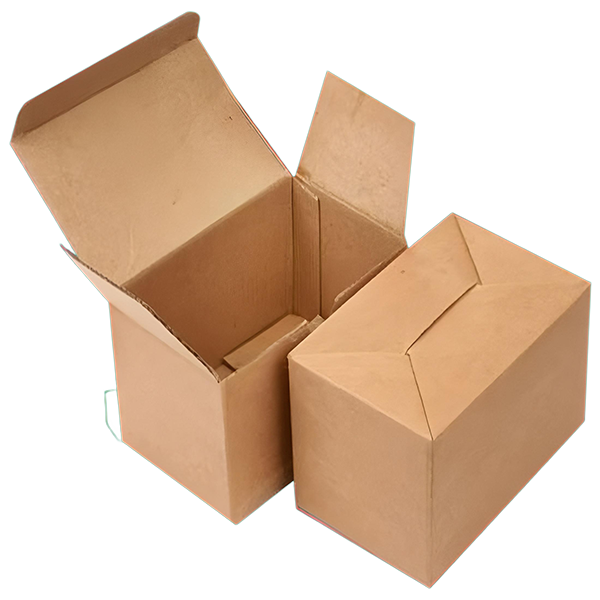
Box erecting. Flat blanks come out of a magazine, are folded and locked or glued into a formed carton, then delivered to the cartoner’s blank infeed. This stage sets the tempo for blank supply and, more importantly, the formed-carton quality that every later stage inherits.
Product infeed and collation. Sealed product arrives from the primary line and is grouped into the count that goes into each carton. The right design depends almost entirely on what is arriving.
Cartoning. The grouped product is loaded into the formed box and the carton is closed. This is usually the pacing element of the whole line, and it is where the bulk of the capital sits.
Case packing. Sealed cartons are packed into shippers. Below a certain volume, a manual station at the line outfeed is genuinely the sensible answer.
Sizing the line: start with a rate, not a model number
Most purchase mistakes are sizing mistakes, and most sizing mistakes come from working backwards from a machine’s stated capacity instead of forwards from a production target.
Required rate (cartons/min) = daily target ÷ number of shifts ÷ net production hours per shift
Everything useful is in the denominator. Net production hours is not shift length. Changeovers, breaks, cleaning, and the small stoppages that nobody logs all come out of it.
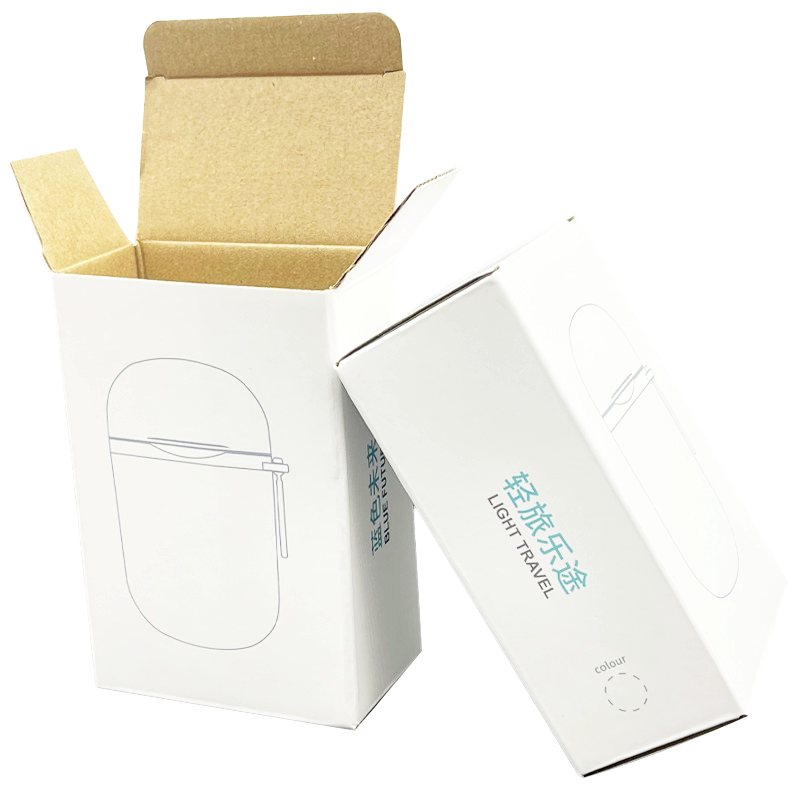
Choosing carton styles: four families and where each one fits
- Snap-lock bottom: The workhorse for frozen food.
- Tuck-end: Common in biscuits and confectionery.
- Two-piece rigid: Premium chocolate and gift packaging.
- Glue-seal bottom: High formed strength for heavier contents.

Food-specific design constraints
Hygiene and cleanability: Stainless-steel construction and sealed electrical enclosures are baseline.
Allergen segregation: The line has to be cleanable between runs of different products.
Cold-room operation: Equipment specified to resist condensation and maintain sensor accuracy.
Carton material compliance: Ensuring all materials meet food-contact safety standards.
Where the quality gain actually comes from
An automated line applies the same mechanical action to every unit. The result is a production run where the last case resembles the first. Furthermore, a line with sensors at each transfer generates a process record, documenting that packaging was under control for a given shift.
Upgrading in stages versus upgrading as a line
Staging the investment spreads capital across budget cycles, but upgrading as a line releases the full labour saving from the first production day. For a mid-speed line, the payback period typically sits in the 12–18 month range.
Questions we get asked during evaluation
1. Can we start with one machine? Yes, equipment can be built with staged integration in mind.
2. How much floor space? Commonly 30–50 m², or 20 m² for compact lines.
3. How many operators? Typically two to three per shift.
Starting the upgrade
The useful first step is a product and carton format review. Send samples to the machinery works and use the measured result to decide the layout. If baked goods or confectionery are part of your mix, the snack cartoning machine buying guide covers considerations in more detail, and producers in the cake and pastry segment will find the discussion of why baked goods producers are upgrading their packing lines useful.
Post time: Sep-24-2026